About Pounders Jewelry
Clarity in Every Detail.
Confidence in Every Choice.
let's talk
Understanding quality
Why Diamonds Are Graded?
Diamonds have been treasured for centuries, but their quality wasn’t always easy to compare. Grading systems were created so diamonds could be evaluated using the same industry wide standards—making value clear and consistent for both jewelers and buyers. Today’s grading scale takes the guesswork out of diamond shopping, giving you confidence in your selection.
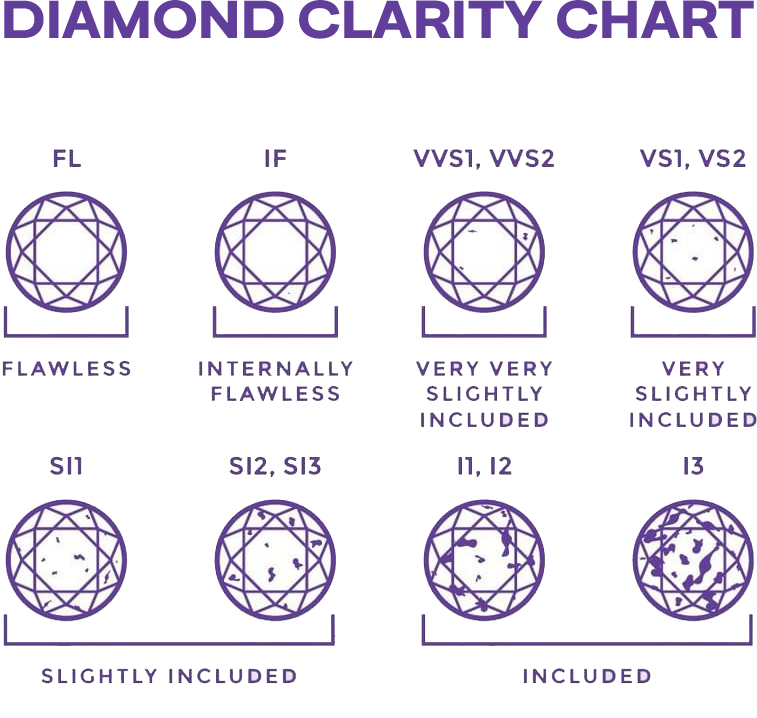
Clarity Is Graded Under 10× Magnification

Diamond clarity is evaluated by identifying internal inclusions and external blemishes using standard 10× magnification, as defined by the GIA.

Clarity Grades Range From Flawless to Included

The GIA clarity scale includes 11 grades: FL, IF, VVS1–VVS2, VS1–VS2, SI1–SI2, and I1–I3, based on the number, size, position, and visibility of clarity characteristics.

Clarity Characteristics Form Naturally During Growth

Inclusions and blemishes develop during a diamond’s natural formation process in both natural and synthetic diamonds, and their characteristics help gemologists identify and grade each stone.
Four Key Factors of Every Diamond
The 4 c's
Diamond Quality
Understanding diamond quality begins with the 4Cs—and we’re here to guide you through each one with clarity and confidence.

CUT

Surprisingly, cut is not shape. Cut determines how well a diamond takes in and reflects light. Cut grade is based on proportions, and polish. symmetry, facet arrangement, and overall craftsmanship. These measurements influence how efficiently light enters, reflects and returns through the stone.

COLOR

Evaluates the presence of body color within the diamond. Diamonds come in many colors and diamonds that range from colorless to light yellow & brown fall within the D (colorless) to Z (light color) color grading scale. This grading is done under controlled lighting and standardized viewing conditions to ensure accuracy.

CLARITY

Assesses internal inclusions and external blemishes. Clarity is graded under 10× magnification, noting the size, number, position, and visibility of natural characteristics formed during the diamond’s growth.

CARAT

Measures the weight of the diamond, not its size. Carat is recorded to the hundredth decimal place using precise electronic balances. Two diamonds of equal carat weight may differ in measurements depending on their proportions.
quality Selection
Every Diamond
Begins With
Careful Evaluation
Before a diamond is ever selected for our cases, Our loose diamond inventory undergoes a detailed inspection that examines the diamonds Clarity, Color, Cut and Carat Weight. This ensures the stone meets recognized grading standards - so the diamond you fall in love with is as exceptional as the moment it represents. performs well under both natural and controlled lighting. Our focus begins long before a setting is chosen—starting with the diamond itself.
Diamonds are Formed
Under Extreme Pressure
Natural Diamonds are created deep within the earth under intense heat and pressure, developing unique internal characteristics during their natural growth.
Diamond Quality Is Measured Using Standardized 4C Criteria
Cut, color, clarity, and carat weight are the universal factors used worldwide to evaluate and compare diamond characteristics.
No Two Diamonds Have Identical
Clarity Patterns
Each diamond has its own arrangement of inclusions and features, giving gemologists a natural way to identify and document every stone.
Quality You Can See
Quality You Can Trust.
Beyond third-party grading, Every diamond is personally reviewed by our in-house experts for visual performance and structural integrity. We confirm that each stone meets our standards for brilliance & symmetry, while honoring that every customer has unique taste and personal preferences.  and overall presentation. Pounders diamonds are always checked for the highest quality before they reach your hands.
Your Story  •  Your Moments  •  Your Jewelry  •
Your Story  •  Your Moments  •  Your Jewelry •